Sun City Camp
Wadi Rum Protected Area, Southern Jordan
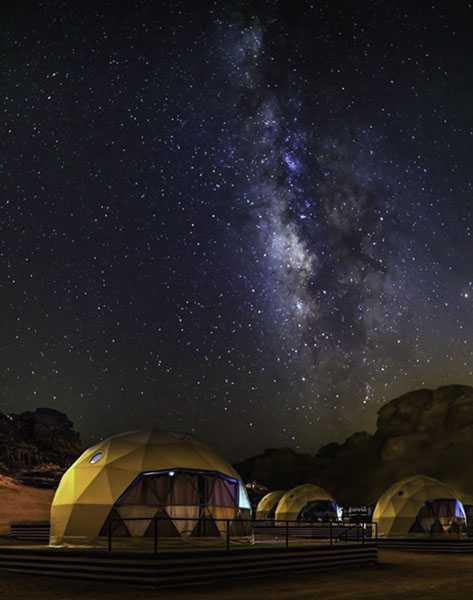
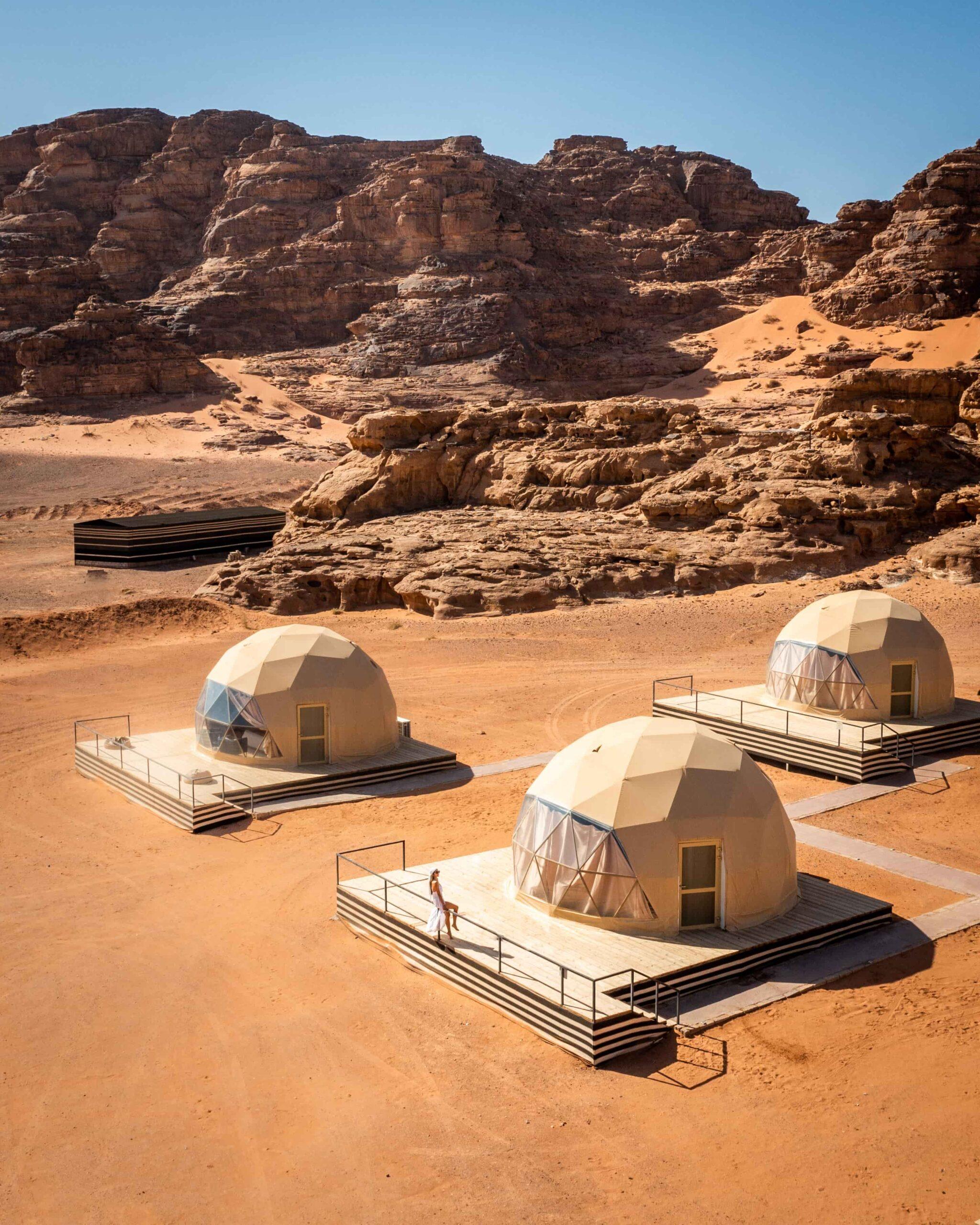
Sun City Camp sits in Wadi Rum’s protected desert. It offers two distinct ways to experience the landscape. Martian Domes — geodesic structures with panoramic windows and floor-to-ceiling desert views — take the futuristic character of Wadi Rum’s terrain and make it the defining feature of the accommodation. Royal and Bedouin-style tents, by contrast, anchor the experience in the traditional culture of the desert rather than its cinematic quality. Consequently, guests choose the register that suits their reason for being here.
Wadi Rum has served as a film location for some of the most visually striking desert productions in cinema — Lawrence of Arabia, The Martian, Rogue One and Dune among them. Sun City Camp sits within the same sandstone and granite terrain that drew those productions to Jordan. However, the landscape’s significance extends well beyond its role as a backdrop. UNESCO protected Wadi Rum in 2011 for both its geological formations and its archaeological record. Furthermore, the camp’s position within this protected area means the surrounding environment remains genuinely intact.
Accommodation
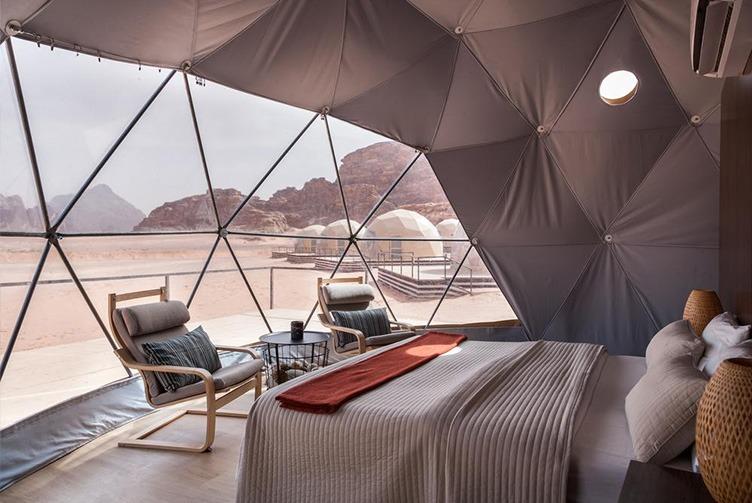
Sun City Camp offers several tent categories for different travel styles. Martian Domes are the signature choice — geodesic structures with panoramic desert views from floor-to-ceiling windows, king beds and private en-suite bathrooms. Grand Tents provide the most spacious single-room format with full-length windows framing the valley. Royal Tents use handwoven textiles and rustic décor to bring an authentic Bedouin aesthetic to the desert stay. Additionally, Deluxe Tents balance comfort with simplicity for guests who want quality without the theatrical design of the domes. All categories include air conditioning, heating and private bathrooms. As a result, the camp works for a wide range of travellers including families, couples and serious photographers.
Activities and Experiences
Sun City Camp organises the core programme of Wadi Rum desert activities. Jeep tours move through the valley’s most significant formations — the Seven Pillars of Wisdom rock mass, the red sand dunes and the narrow canyon systems where Nabataean inscriptions survive in the cliff walls. Camel rides operate at dawn when the air is cool and the light is low. Moreover, the Zarb dinner — traditional Omani-Jordanian slow-cooked lamb prepared underground — is served in the open desert. Stargazing follows naturally after dinner. At this distance from city light pollution, the night sky at Wadi Rum is among the clearest in the Middle East. Furthermore, hot air balloon flights depart at first light for those who want the aerial perspective on the valley before the day’s ground-level exploration begins.
Dining
Dining at Sun City Camp takes place in the main Bedouin tent with outdoor seating available in the evening. Breakfast includes a full spread of regional and continental options. Dinner centres on the Zarb barbecue — the traditional underground cooking method that produces slow-cooked meat with a depth of flavour that conventional grilling cannot replicate. Additionally, the kitchen accommodates vegetarian, vegan and gluten-free requirements with advance notice. Eating outdoors at the camp, with the sandstone formations visible in every direction and the temperature dropping after sunset, is one of the most atmospheric meals available in Jordan.
When to Visit
October through April is the correct season for Sun City Camp. Days are warm and active. Nights drop to single figures in December and January — bring layers. However, the cold produces the clearest stargazing conditions of the year and the strongest low-angle light on the dune formations at dawn and dusk. Spring months of March and April occasionally bring wildflowers to the desert floor after winter rains. Therefore, the period from November to March delivers the fullest combination of visual quality, comfortable activity and night sky access.
Combining Sun City Camp with Other Destinations
Sun City Camp works as two nights within a southern Jordan circuit. Petra lies two hours north — most itineraries combine both sites as the core of a Jordan journey. Aqaba and the Red Sea coast sit forty minutes to the south, providing a natural coastal extension. Additionally, the Saudi border crossing nearby gives access to AlUla for travellers following the Nabataean route across both countries. Because Hegra and Petra were the southern and northern capitals of the same ancient kingdom, travelling between them through Wadi Rum gives the archaeology a geographical coherence that visiting either site alone cannot provide.
For Jordan: Jordan
For Wadi Rum: Wadi Rum
For the full Arabian Peninsula: Arabia by Oloi Shorua
If you are considering Sun City Camp as part of a private Arabian journey, we would be pleased to begin with a conversation.
Sun City Camp — suncitycamp.com
Visit Jordan — visitjordan.com