AlUla: Journeys Through the Nabataean Desert
AlUla sits in a sandstone valley in northwestern Saudi Arabia, three hours by road from Medina. The landscape is immediately arresting — narrow canyon systems, isolated rock towers and open desert plains that millions of years of wind and geological pressure have formed. However, the archaeology gives the landscape its full weight. The Nabataeans, who built Petra in Jordan, built their second city here. Over a hundred monumental rock-cut tombs remain in the surrounding terrain, with inscriptions still legible after two thousand years.
Saudi Arabia opened to international tourism in 2019. AlUla is consequently early in its evolution as a global destination. The infrastructure is developing quickly, but the landscape has not yet been over-interpreted. The window for experiencing AlUla in this condition — genuinely uncrowded and unhurried — is open now. It will not remain open indefinitely.
The Landscape
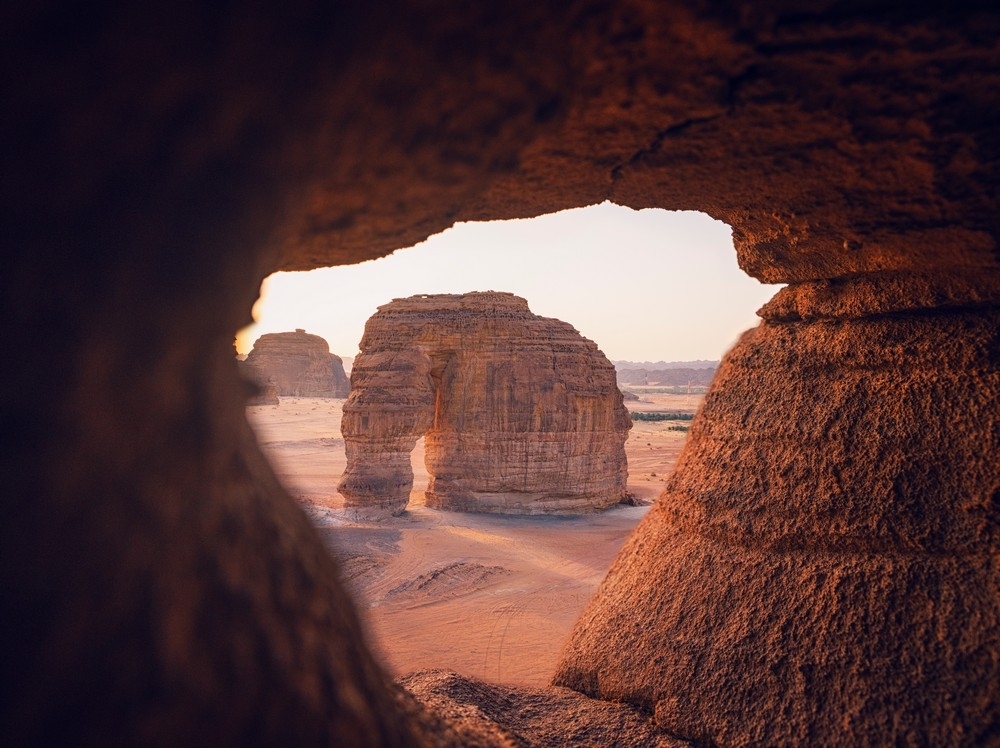
AlUla is experienced through scale. Sandstone cliffs rise sixty metres from the valley floor. Canyon corridors narrow to the width of a person before opening suddenly onto wide desert plains. The volcanic terrain of the Harrat Uwayrid lies to the east — ancient lava fields that change the colour and texture of the ground entirely. Elephant Rock, a natural formation rising twenty-one metres from the open desert, is visible from a considerable distance. Furthermore, the light in this landscape changes everything. Early mornings produce low-angle warmth that reveals the sandstone formations in a way no photograph fully captures.
The strongest journeys through AlUla allow the landscape to unfold at a natural pace. Time spent sitting within the terrain rather than moving through it continuously is not wasted — it is the point.
Hegra
Hegra is the reason most serious travellers come to AlUla first. The Nabataean civilisation built their southern capital here — Petra was their northern one. Over a hundred monumental rock-cut tombs emerge from sandstone formations across the site. Nabataean craftsmen carved these facades directly from the living rock with a precision that two thousand years have barely eroded. UNESCO designated Hegra as Saudi Arabia’s first World Heritage Site in 2008. However, most of the world has not yet heard of it. That condition is part of what makes the visit significant.
Early morning access, before the heat builds and before groups arrive, produces the most powerful encounter with the site. Indeed, the tombs at that hour — illuminated by low desert light, surrounded by silence — represent one of the genuinely remarkable archaeological experiences available anywhere in the world.
Dadan and the Older Civilisations
The Nabataeans were not the first people to build at AlUla. Dadanite and Lihyanite civilisations occupied this valley for centuries before them. Their rock-carved tombs, temples and inscriptions predate Hegra by several hundred years. In addition, the Ikmah canyon contains one of the largest concentrations of ancient inscriptions in the Arabian Peninsula. Travellers, traders and local inhabitants left thousands of individual carvings here across different periods and scripts.
For travellers who want to understand AlUla as more than a Nabataean site, Dadan and Ikmah provide essential context. The valley has consequently seen habitation, trade and inscription for at least two and a half thousand years.
Old Town and Oasis
The Old Town of AlUla is a thirteenth-century mud-brick settlement that stands at the head of the oasis. Its layered architecture — narrow lanes, stacked houses, a fortress above the valley floor — creates continuity between the ancient landscape and the centuries of habitation that followed. Families lived here until the 1980s. As a result, the settlement retains a quality of genuine abandonment rather than reconstruction. The oasis below extends through date palms and citrus groves that farmers have cultivated here for thousands of years.
Where to Stay in AlUla
The hospitality landscape in AlUla is developing with deliberate restraint. Four properties currently define the circuit for serious luxury travellers.
Habitas AlUla integrates directly into the canyon landscape — low-density, eco-conscious and one of the most considered luxury properties in Saudi Arabia. Banyan Tree AlUla sits within the valley with strong views toward the sandstone formations and the full Banyan Tree service standard. Shaden Resort occupies a quieter position with direct access to the heritage sites and an intimate scale. The Chedi Hegra brings a different architectural language to the same remarkable terrain — built directly within the Hegra UNESCO site itself.
When to Travel
The optimal window for AlUla is October through April. Temperatures during this period are comfortable for walking, desert exploration and extended time at archaeological sites. The light in winter is exceptional — low, angled and warm in the early morning and late afternoon. Furthermore, visitor numbers are lower outside the winter festival season, which concentrates around January and February. May through September brings intense heat that makes extended outdoor activity very difficult.
Combining AlUla with Other Arabia Destinations
AlUla combines most naturally with the Saudi Red Sea coast. The movement from sandstone valley to volcanic terrain to mountain escarpment to sea creates one of the strongest geographical progressions in the Arabian Peninsula. Additionally, Diriyah and Riyadh add historical context that places AlUla within the broader Saudi story. Jordan — Petra, Wadi Rum and the Dead Sea — extends a western Saudi journey northward into Nabataean territory on the other side of the ancient trade route.
For the wider Saudi Arabia journey: Saudi Arabia
For the full Arabian Peninsula: Arabia by Oloi Shorua
If you are considering AlUla as part of an Arabian journey, we would be pleased to begin with a conversation.
Experience AlUla — experiencealula.com
Saudi Tourism — visitsaudi.com