Diriyah and Riyadh: Heritage and the New Saudi Arabia
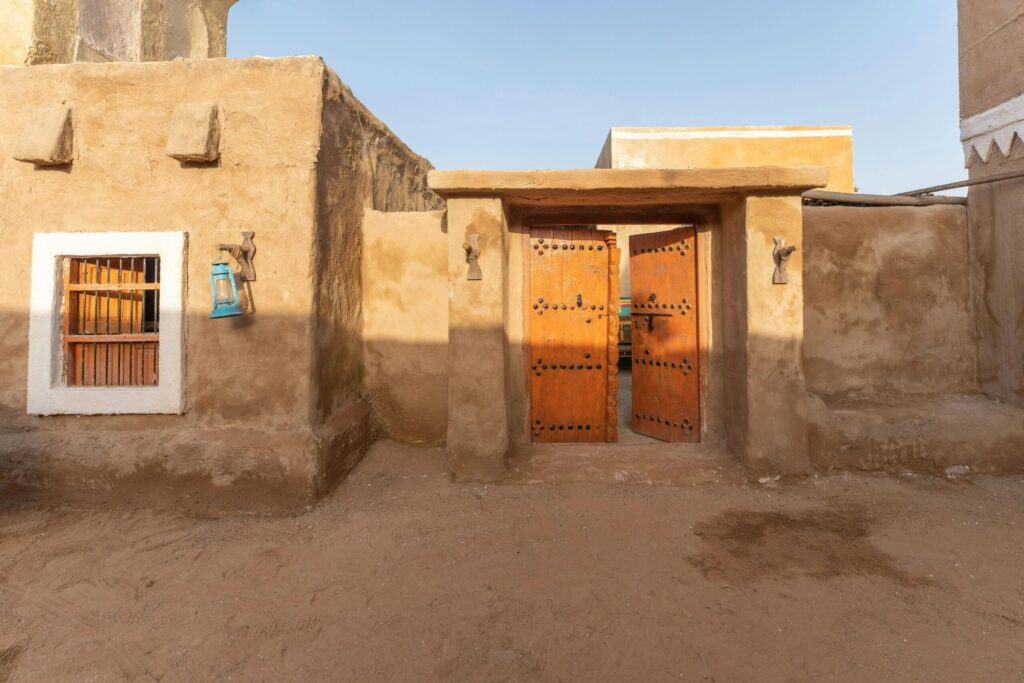
Diriyah is where the Saudi state began. The At-Turaif district — a UNESCO World Heritage Site — preserves the mud-brick architecture of the first Saudi capital, founded in the fifteenth century and destroyed by Ottoman-Egyptian forces in 1818. The restoration now underway is among the most ambitious heritage projects in the Islamic world. Understanding Diriyah before travelling to AlUla or the Empty Quarter places everything else in a historical frame that makes it more legible.
Riyadh rewards a day of careful attention. The city moves with scale and momentum. However, beneath its contemporary skyline lie specific places that carry genuine historical and cultural weight — the National Museum, the Murabba Palace complex and the Edge of the World escarpment, ninety kilometres to the northwest, where the plateau simply ends and the desert drops away below.
Diriyah
At-Turaif sits along the Wadi Hanifah on the western edge of Riyadh. The mud-brick towers, courtyards and palace complexes of the first Saudi capital were built in the Najdi architectural tradition — geometric ornamentation, earthen walls and spatial design rooted in the desert climate. Ottoman forces destroyed the settlement in 1818 after a siege that ended the first Saudi state. The ruins stood largely untouched for nearly two centuries before the current restoration began.
UNESCO designated At-Turaif a World Heritage Site in 2010. The ongoing restoration is restoring not only the physical structures but the spatial relationships between them — the way the palace complex and the surrounding residential quarters once functioned as an integrated settlement. For travellers who want to understand Saudi Arabia as a civilisation with a specific history rather than simply a contemporary petro-state, Diriyah is the most important single site in the country.
Early morning and late afternoon are the strongest times to visit. The mud-brick walls catch the low desert light in ways that midday does not produce. Consequently, arriving at opening and allowing two to three hours to move through the site on foot produces a very different experience from a rushed afternoon visit.
Riyadh
The National Museum of Saudi Arabia is one of the strongest history museums in the Gulf — eight galleries covering Arabia from prehistoric geology through the Islamic period to the formation of the modern Kingdom. The Murabba Palace complex, built for King Abdulaziz ibn Saud in 1936, carries a different scale of history from the towers nearby. The palace’s earthen walls and courtyard design give a sense of what Riyadh looked like before oil transformed the region.
The Edge of the World is not well known internationally. However, Jebel Fihrayn — a dramatic escarpment ninety kilometres northwest of the city — drops away to open desert five hundred metres below. The plateau simply ends. There are no barriers, no infrastructure and no other visitors on a midweek morning. For a city of eight million people, the emptiness ninety kilometres away is striking.
Riyadh is not a destination in the way that AlUla or the Aseer Highlands are. Furthermore, it does not need to be. Two days spent with specific intentions — the National Museum, Diriyah, the Edge of the World, one evening in the older Qasr Al Hukm district — produces a depth of understanding that makes the rest of a Saudi journey more coherent.
When to Travel
Riyadh and Diriyah are best visited between October and April. Daytime temperatures during this period are comfortable for walking and extended time outdoors. December and January can be cool in the evenings. Additionally, the winter months bring clearer skies and better light for photography across both the heritage sites and the desert escarpment. May through September brings extreme heat — outdoor exploration becomes very difficult between midday and late afternoon.
Combining Diriyah and Riyadh with Other Arabia Destinations
Riyadh and Diriyah work best as part of a wider Saudi Arabia journey rather than as standalone destinations. The movement from Riyadh westward to AlUla creates a journey across two very different Saudi landscapes — central plateau to northwestern sandstone valley. Additionally, the Empty Quarter lies to the south and provides the desert extreme that gives the historical centre its geographical context. For travellers combining several Saudi regions in one journey, Riyadh is where the historical frame is set.
For Saudi Arabia journeys: Saudi Arabia
For AlUla: AlUla
For the full Arabian Peninsula: Arabia by Oloi Shorua
If you are considering Diriyah and Riyadh as part of a private Arabian journey, we would be pleased to begin with a conversation.
Diriyah — diriyah.sa
Saudi Tourism — visitsaudi.com